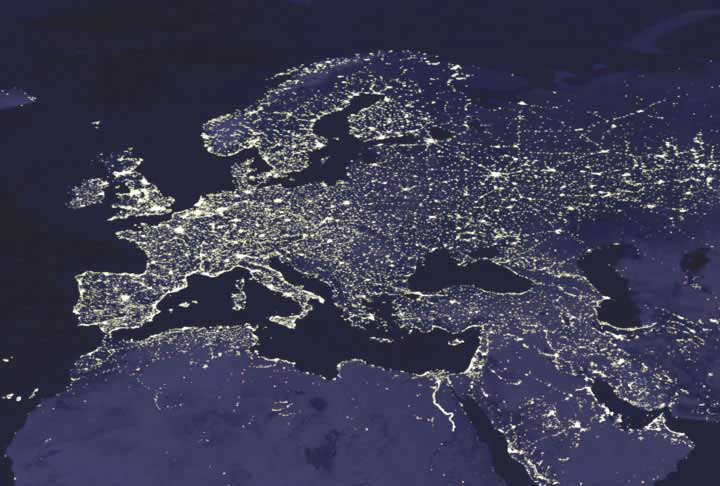
In late 2017 Luis Martinez had an idea. He was curious about data and its manipulation in particular by governments. Martinez was not anti-government but more curious about how different governments report data and if it could be relied upon as truthful. And if it was not, how can government numbers be verified? That is when he had a “light bulb” moment.
If you live in a democracy, you might think verifying data is an unnecessary task. Democracies by definition generally have more open disclosure of information and inspection by constituents, political party leaders, and the country’s media. But what about countries with less transparency and democracy? What about autocratic dictatorships? Are they truthful?
Can GDP Be Verified
Martinez focused his research on a country’s reported economic numbers – namely Gross Domestic Product or GDP. GDP measures the economic output and success of a nation and with that the success of its leaders. Notably, in a democracy or autocracy, a failing economy is a quick way to a leader’s career either through elections or revolt.
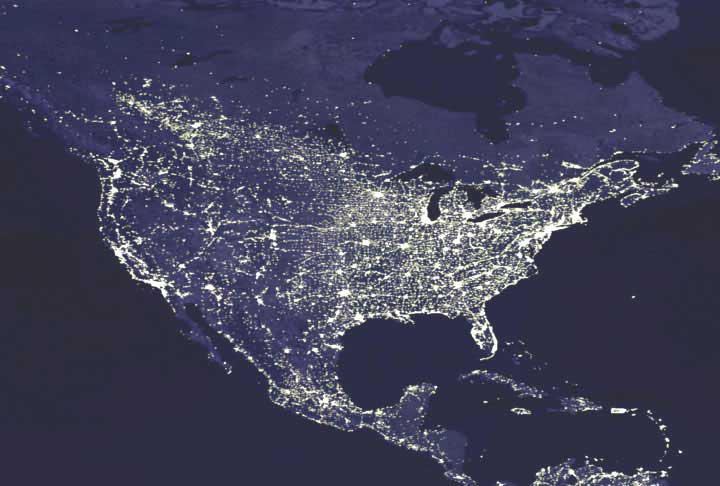
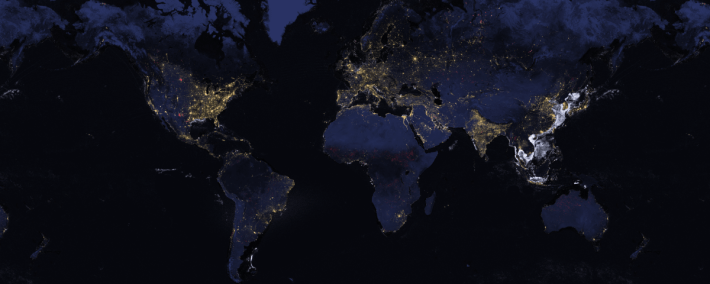
GDP numbers are self-reported by government agencies and beyond democracies are increasingly difficult if not impossible to verify. Why would a leader who has the ability to manipulate their numbers report anything but good news? This is where Martinez’s “light bulb” comes into play. He reasoned that as a county’s economy grew or withered, so would its visible light as seen from nighttime satellite pictures and he was right. He found there was a relationship between light from new factories, buildings, and power plants and reported economic growth. He gathered data from the US Air Force’s Defense Meteorological Satellite Program (DMSP) and compared it to statistics from the World Bank. What he found was although there were variations even among democracies, that dictatorships overstated economic change by a stunning average of 35%!
Data Defense
Checking numbers using US Air Force satellite photos may seem a bit extreme, however, it shows that seemingly impossible numbers can have proxies for verification. When a data claim seems questionable, or “too good to be true” it requires a little more research. And what we learn here is the data is always out there…somewhere.
More Information:
Luis Martinez, How Much Should We Trust the Dictator’s GDP Growth Estimates?
https://doi.org/10.1086/720458
World Bank – Light Every Night data sets available on Amazon Web Services
https://aws.amazon.com/marketplace/pp/prodview-b23gbtlgkgbuq#overview

 Data Duped